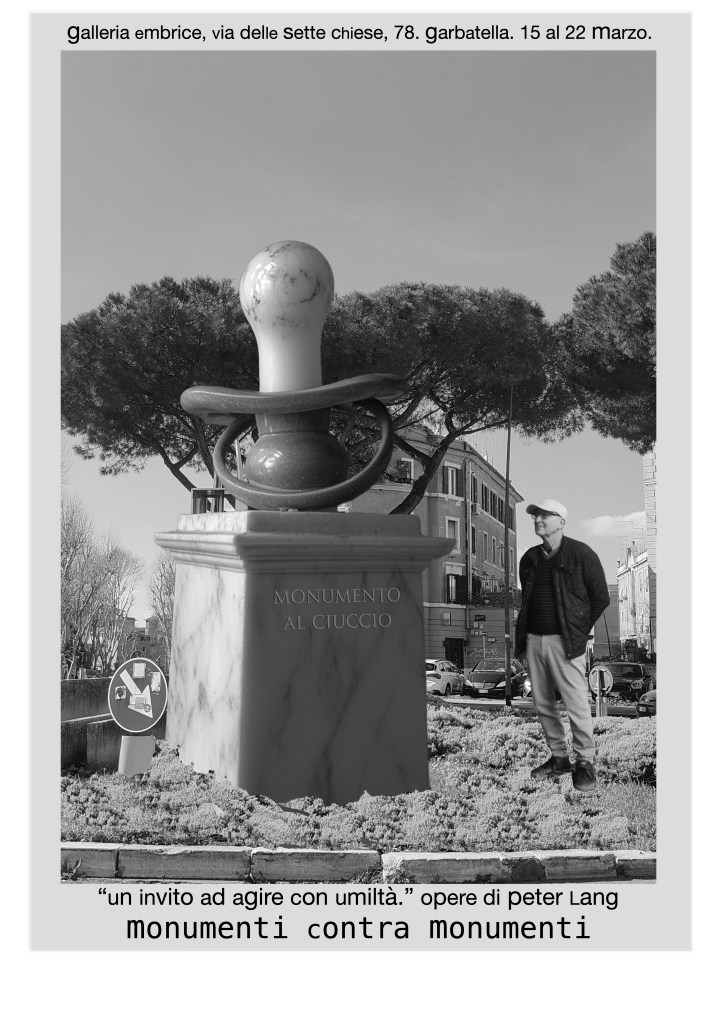
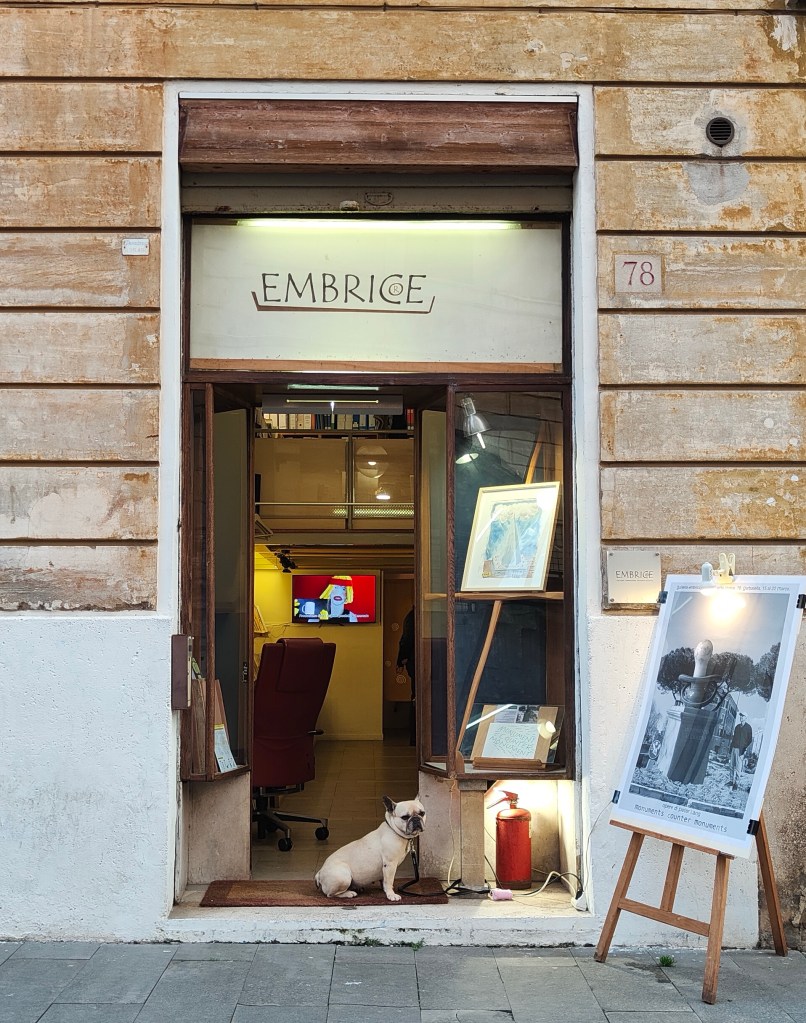
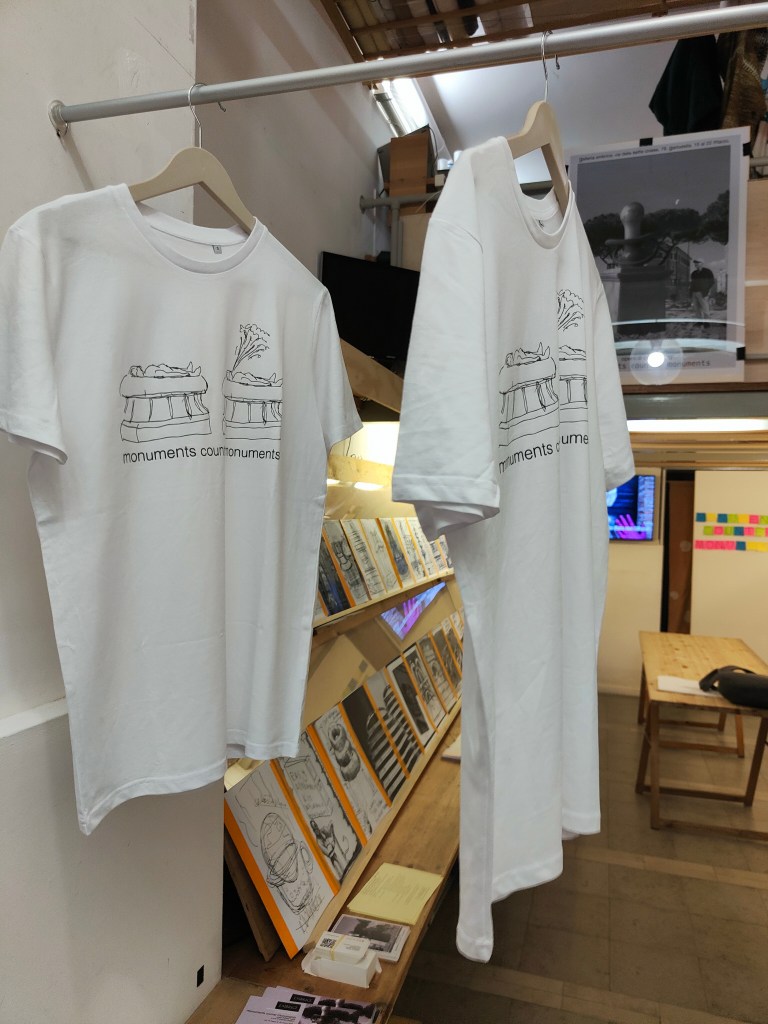
Monuments Counter Monuments, Embrice Gallery Garbatella, Rome. 15 – 22 March 2022. Works by Peter Lang.
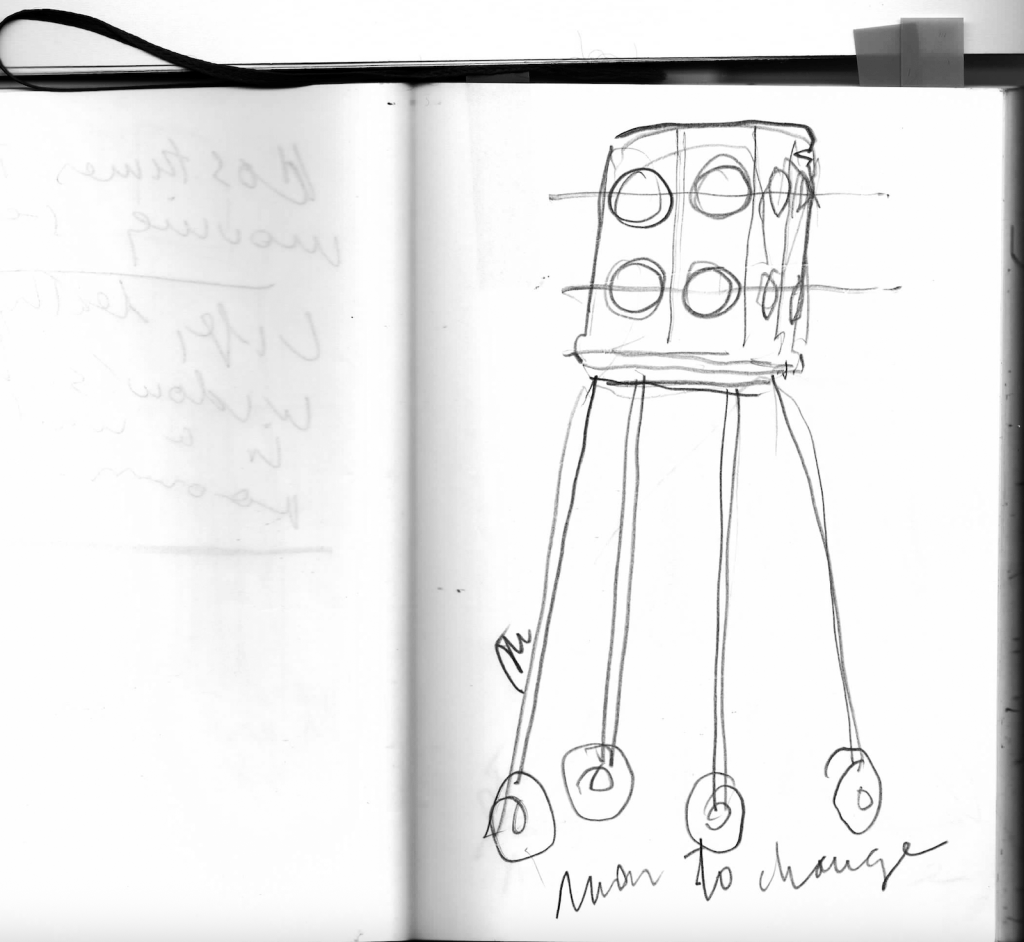
NEW! Monument to Change, October 2025
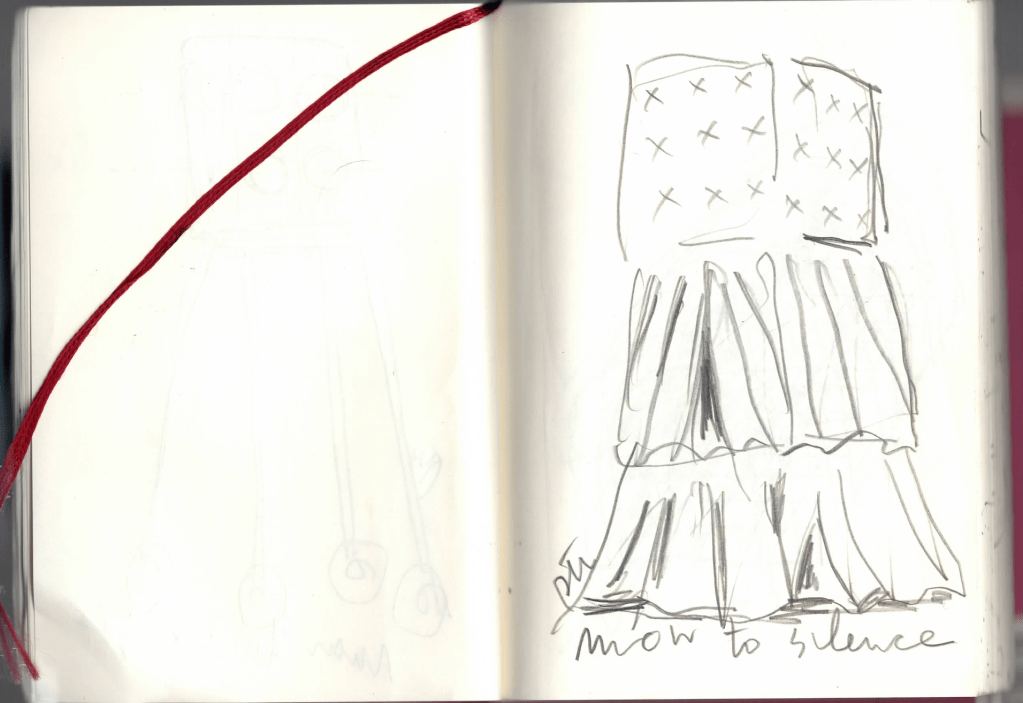
NEW! Monument to Silence. October 2025.
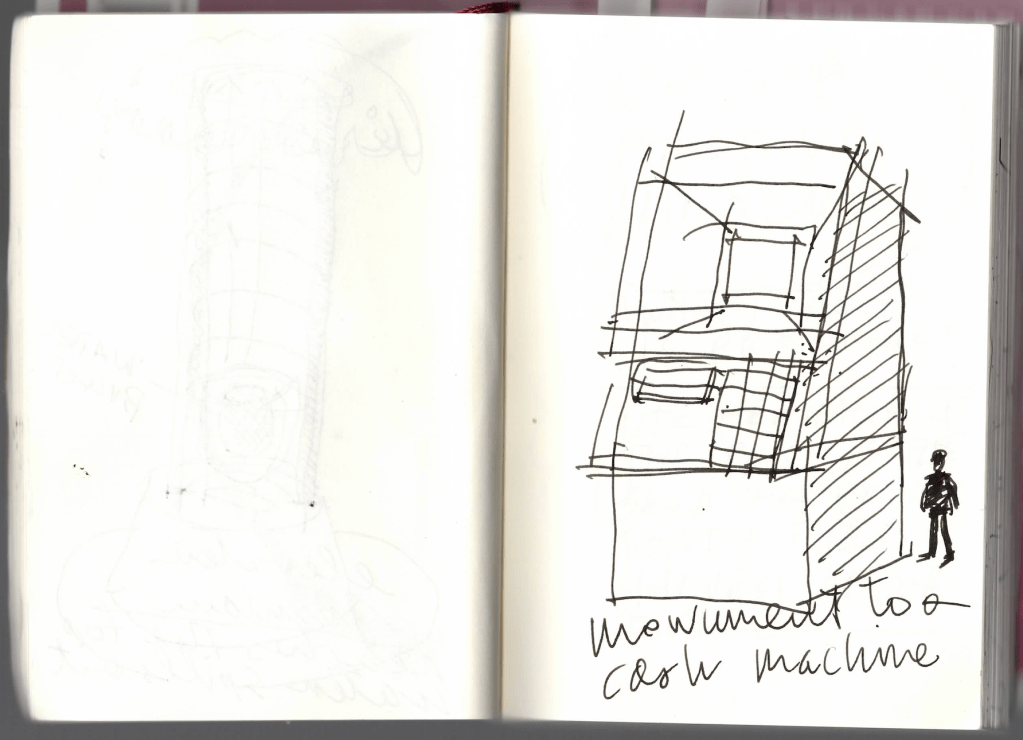
NEW! Monument to a Cash Machine. October 2025.
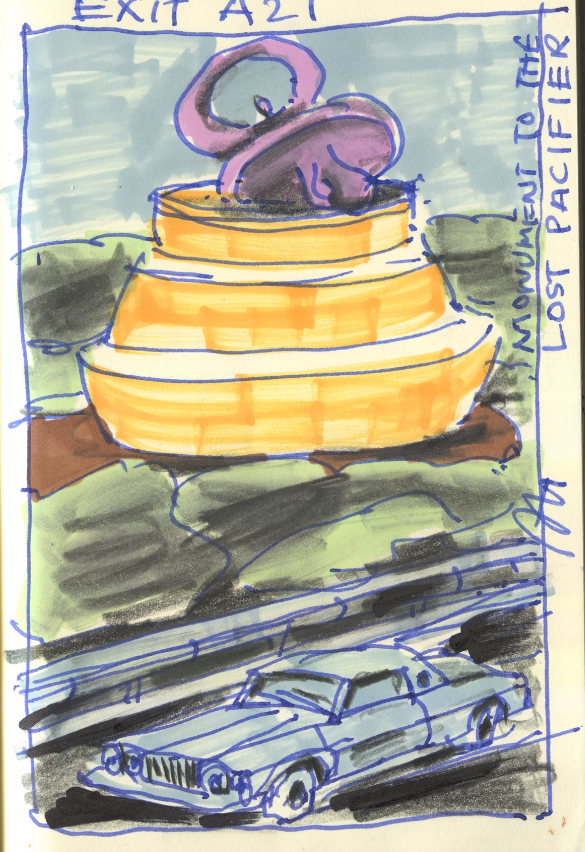
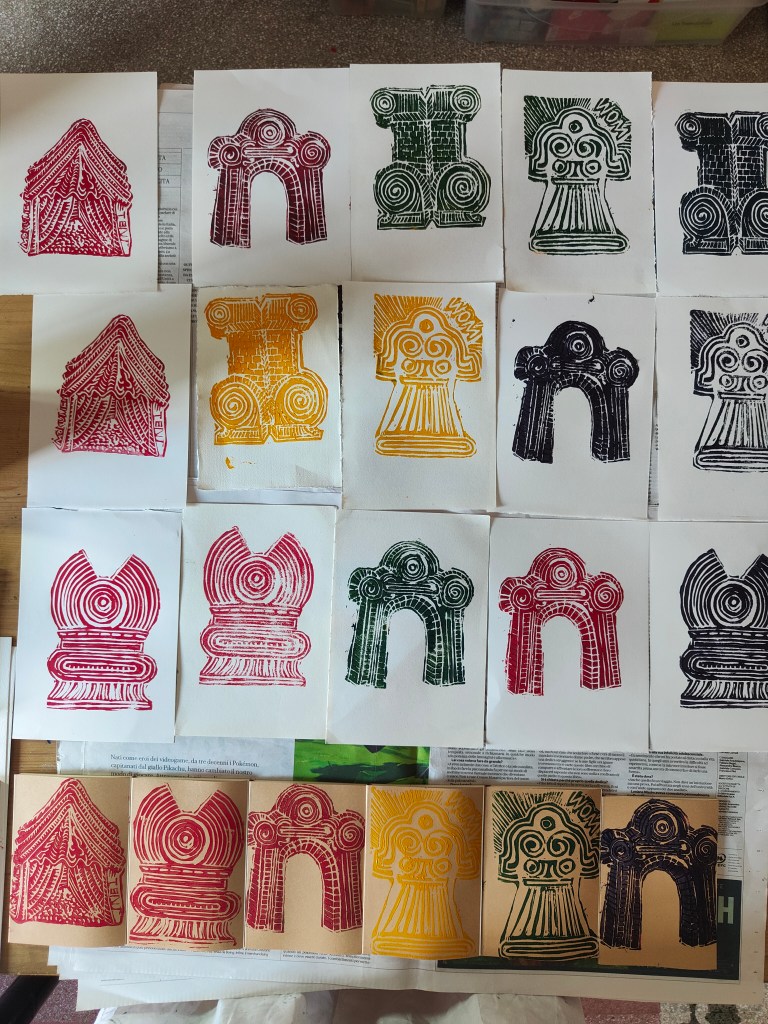
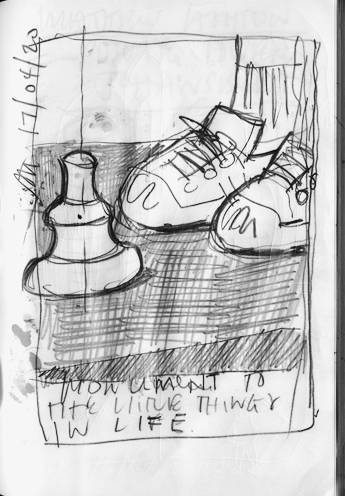
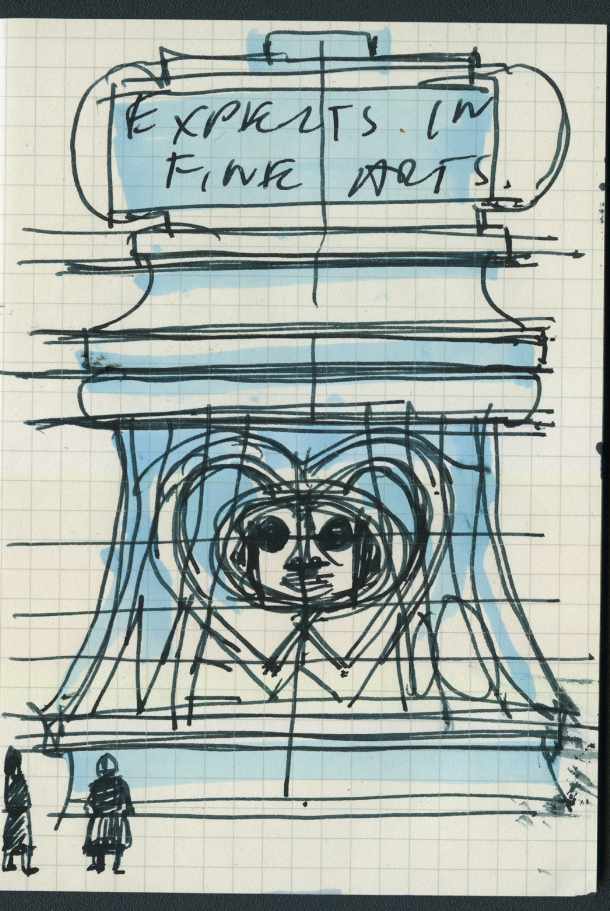
The Monument Podcast: a video animation produced by YellowGloveLab for Embrice Gallery Rome. Peter Lang Director, G. Penzo Editor, Carmelo Baglivo Curator.
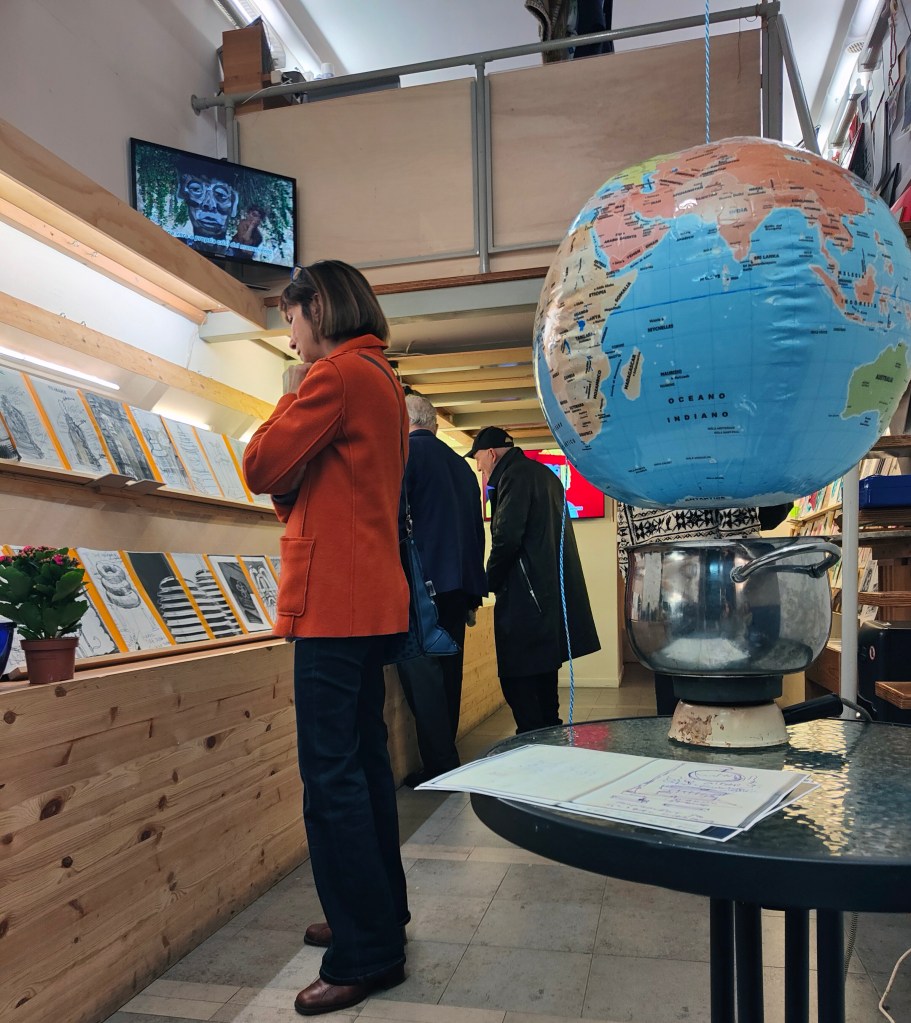
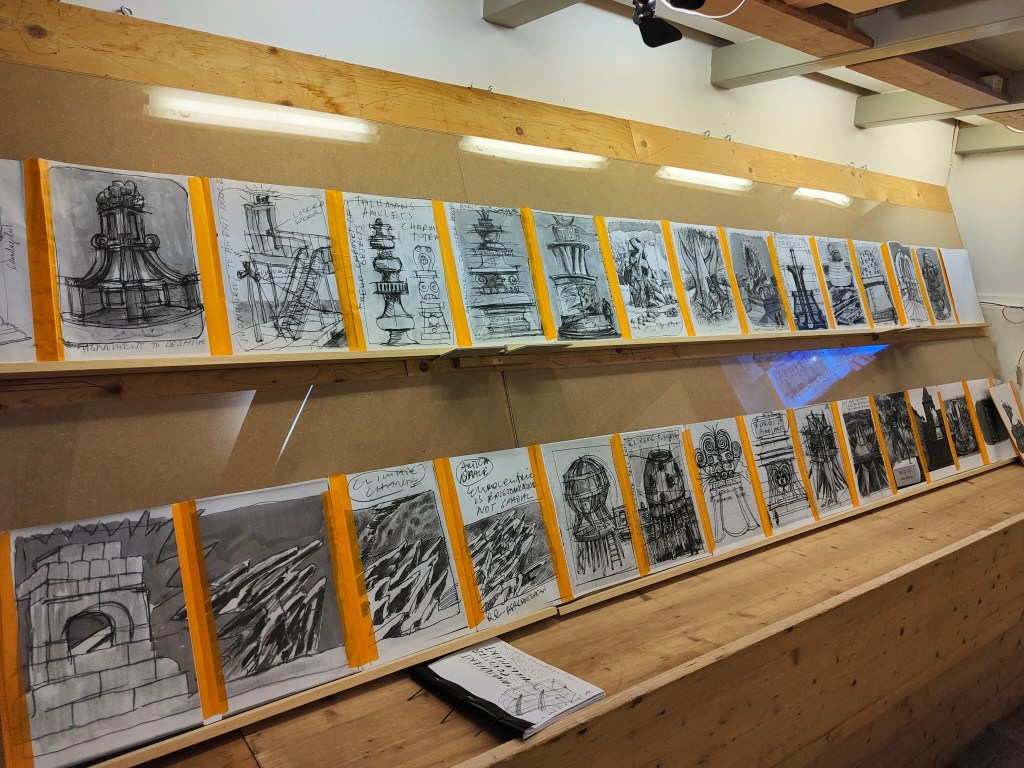
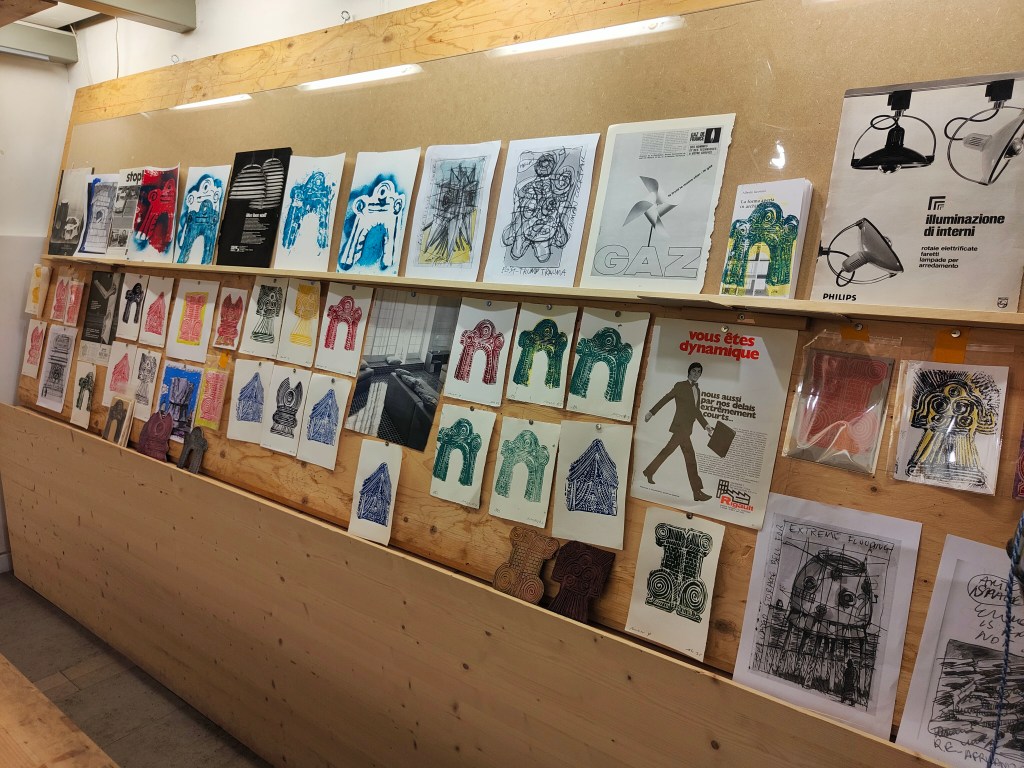
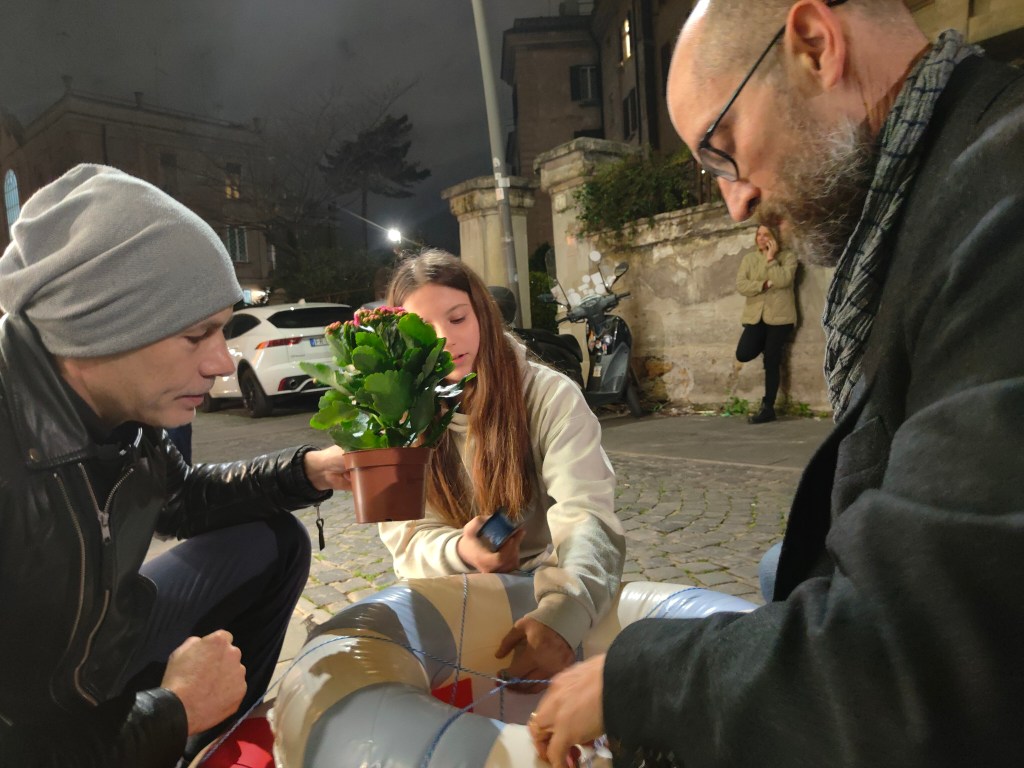
Temporary Monument to European Unity. Performance. Embrice Gallery.
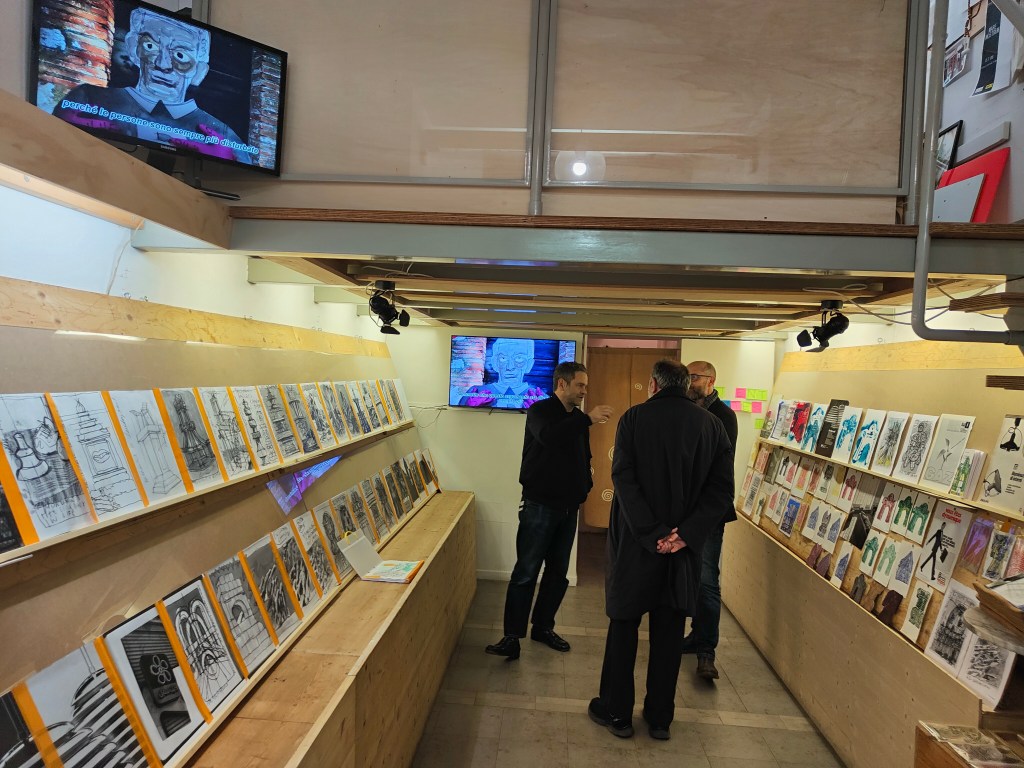
Last night we opened my exhibit Monuments counter Monuments, a collection of works I have been developing that deal with the subject of monumental monuments and my more humble antithetical proposals. On this short video you can see the temporary inflatable monument to Europe. I would like to warmly acknowledge galleria Embrice, its founder Carlo Serverati, and the show’s curator Carmelo Baglivo. I would also like to thank Daniele Mancini who was there for the performance, Francesco Careri who came back from the huge public event in support for a united Europe in Piazza del Popolo and approved the making of the temporary monument, my close family and all the great people who came out to see the show.
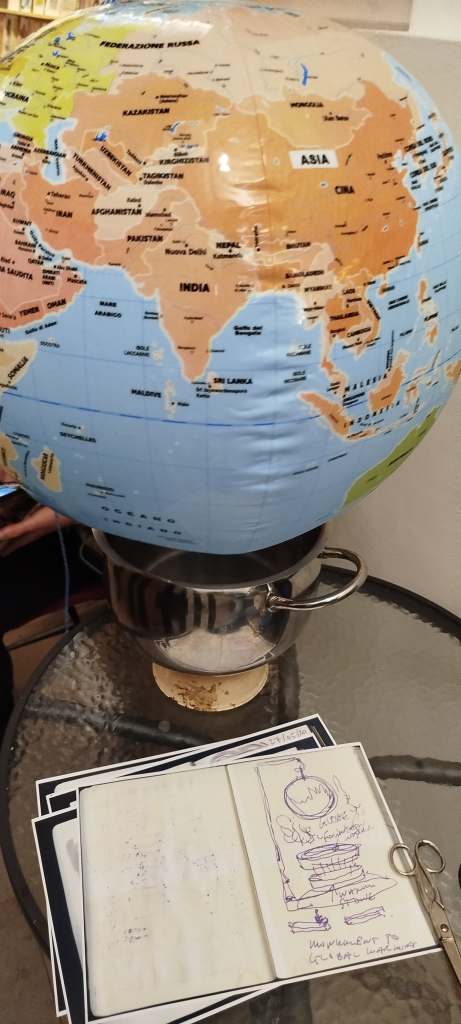
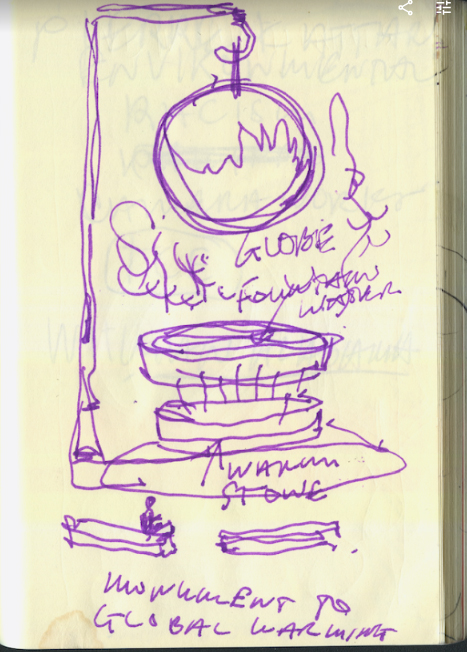
Monument to Global Warming. Installation: inflatable globe, pot with boiling water, electric flat stove. March 15.
INTRODUCTION BY CARMELO BAGLIVO:
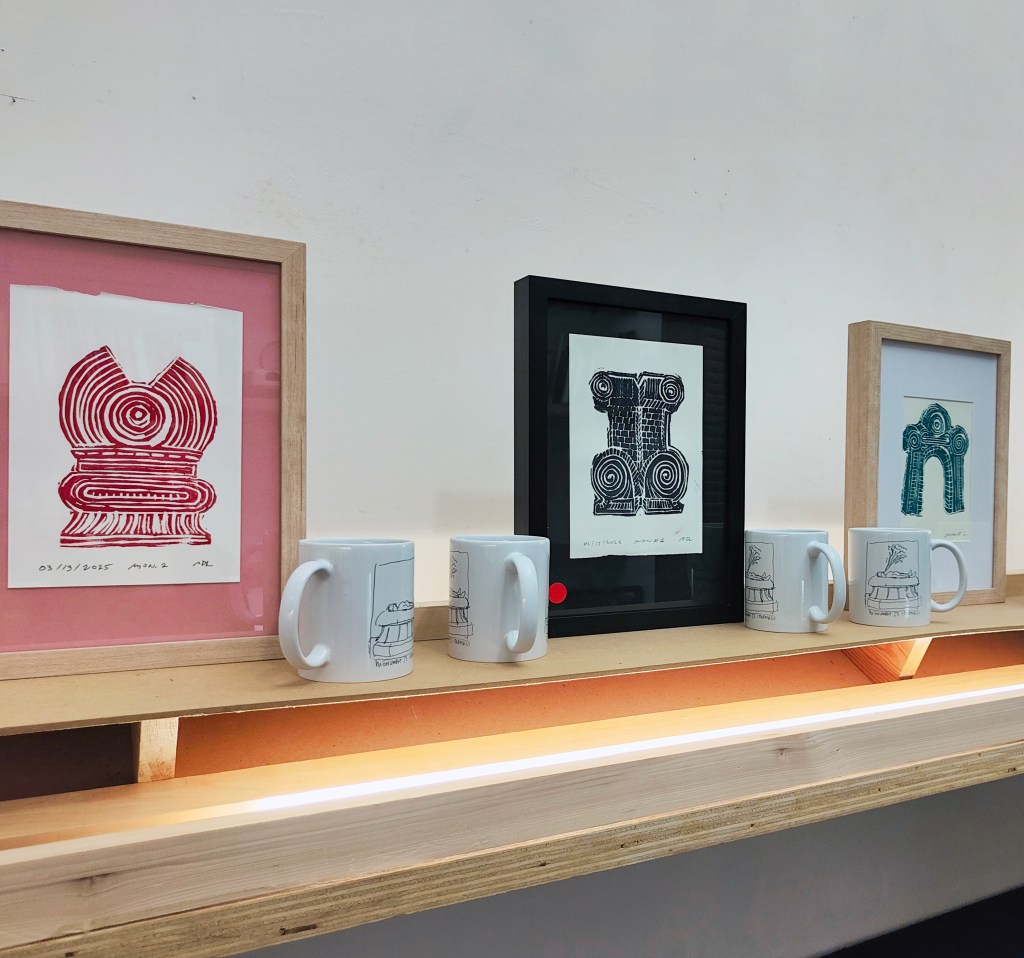
Peter Lang, an American architect transplanted in Rome, presents at the Embrice gallery, a series of works created as part of his personal research on monuments.
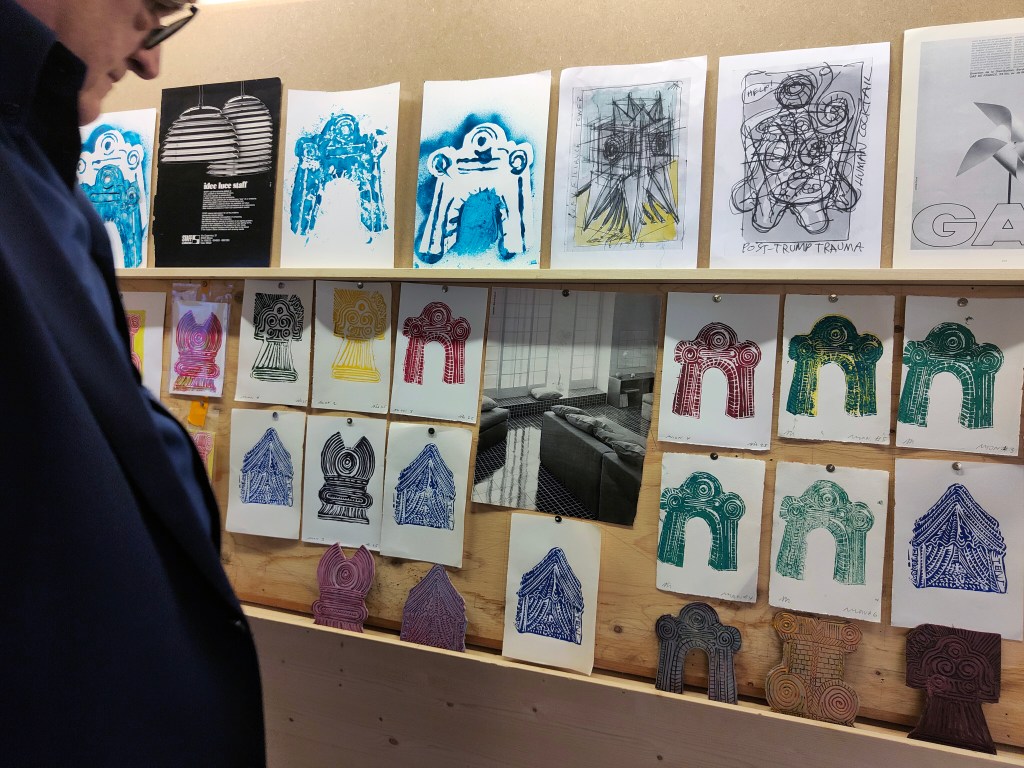
His work is represented on different types of materials and supports, from paper to drawing on mugs or the use of different types of printing.
A wealth of symbols and signs to narrate the end of the monument, understood as an element of collective memory, and the birth of new monuments linked to the everyday life of a world that is increasingly closed in on itself.
The monument does not disappear, the memory cannot be erased, but is transformed into an anti-monument.
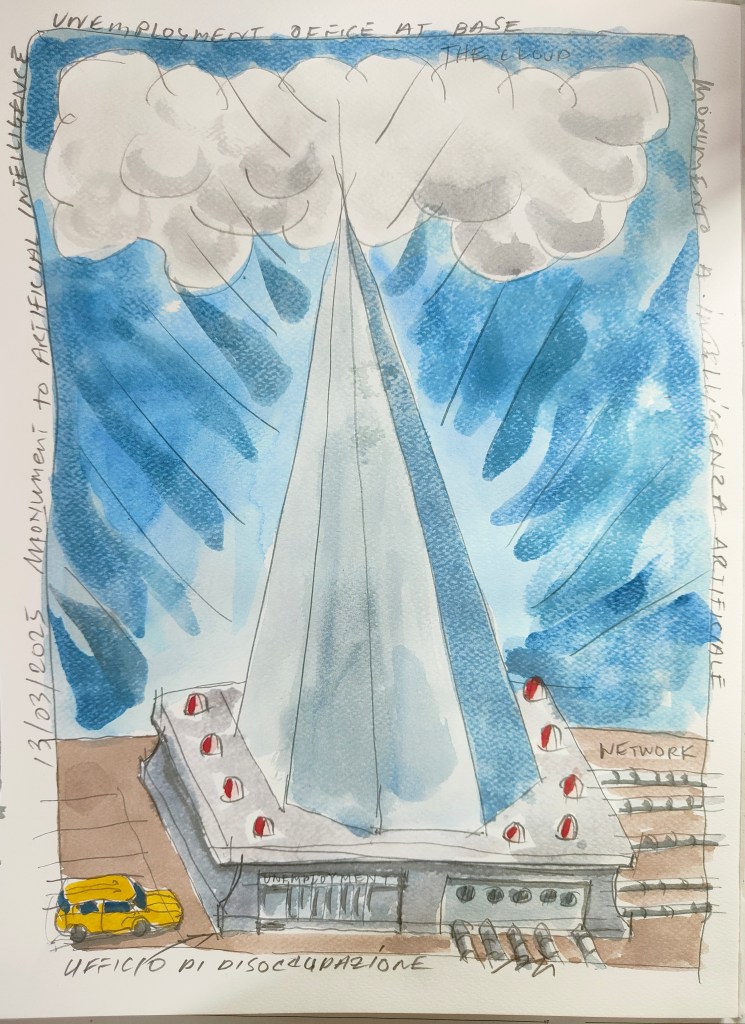
In Peter Lang’s drawings, the anti-monument often still retains the memory of what formally characterised it. The structure remains, the pedestal remains and above all the place, but it no longer represents the memory of an event or a great man, but that which passes through the web every day. That virtual world where self-monuments are built.
The anti-monument is everywhere in various forms, it has neither past nor future, it is all present. In the present. The anti-monument is a domestic object like the monument to the dummy’.
A desecrating operation reminiscent of Venturi’s ‘learning from las vegas’ duck or Cattelan’s finger.
he monument is a monument to consumption, emptied of meaning. The monument is an everyday object in fact the exhibition is presented in a podcast. It is very close to a pop art operation where everyday objects become art.
Lang is American and lives in Rome and it is not by chance that he works on the monument, it is a Venturi-like operation the idea of elevating Las Vegas to an object of study within the framework of contemporary architecture.
‘The exhibition gives back the idea of telling the story as a process, as an archive of signs and symbols, unfolding in space according to a sequence, working on the memory of what we already know and the discovery of new meanings.’ Paola Nicolin, Las Vegas Backstage, Abitare, 2009.
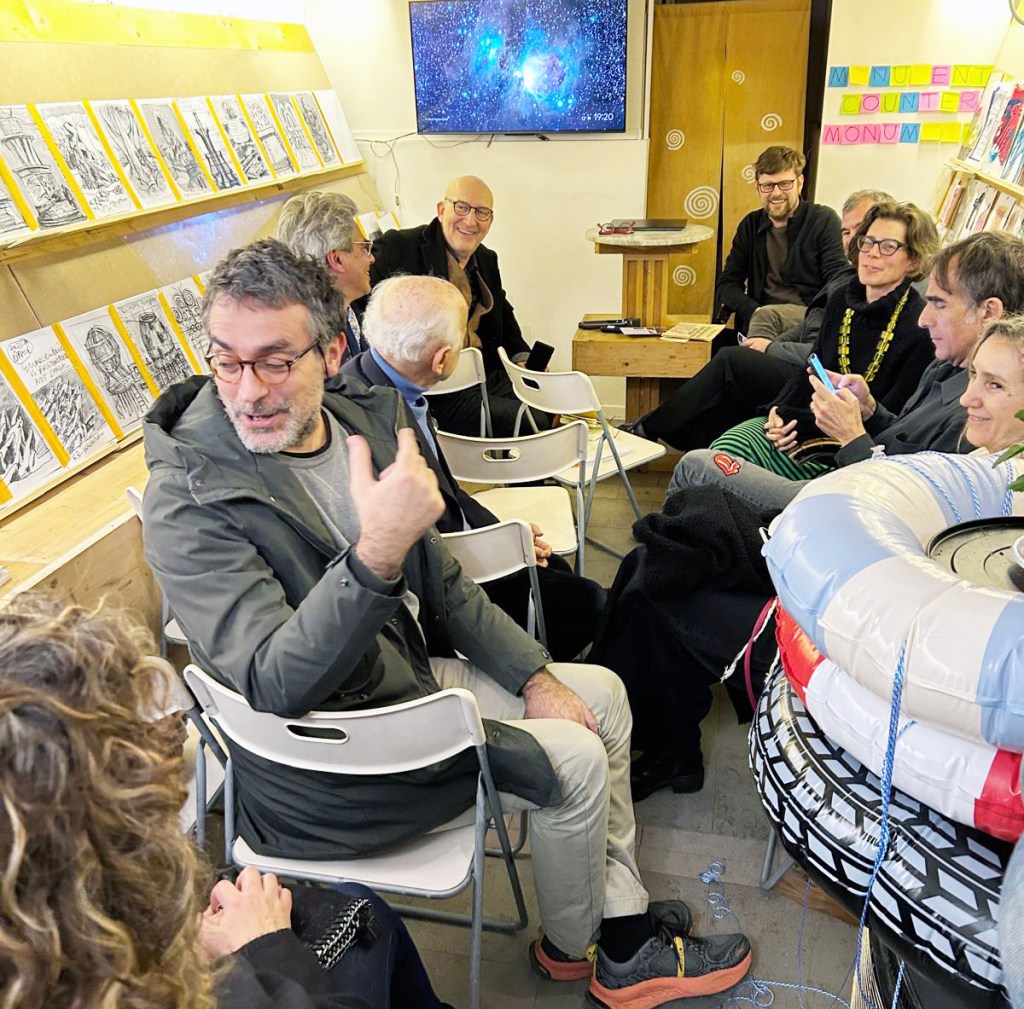
Closing discussion at the Embrice Gallery, Rome. March 22.
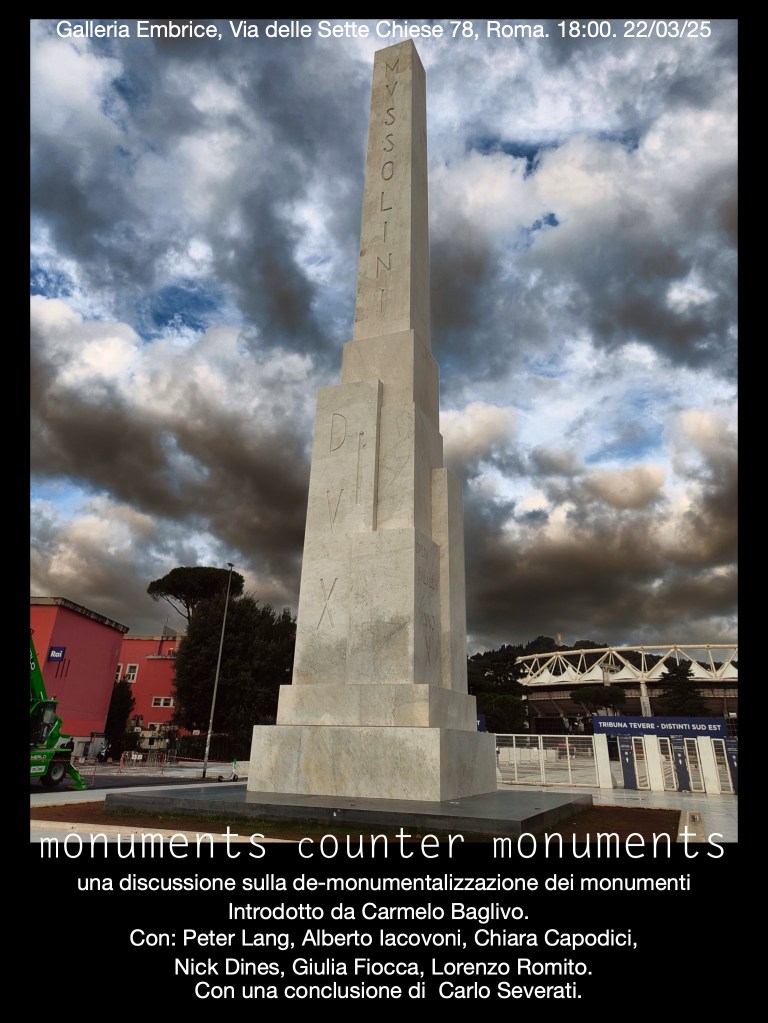
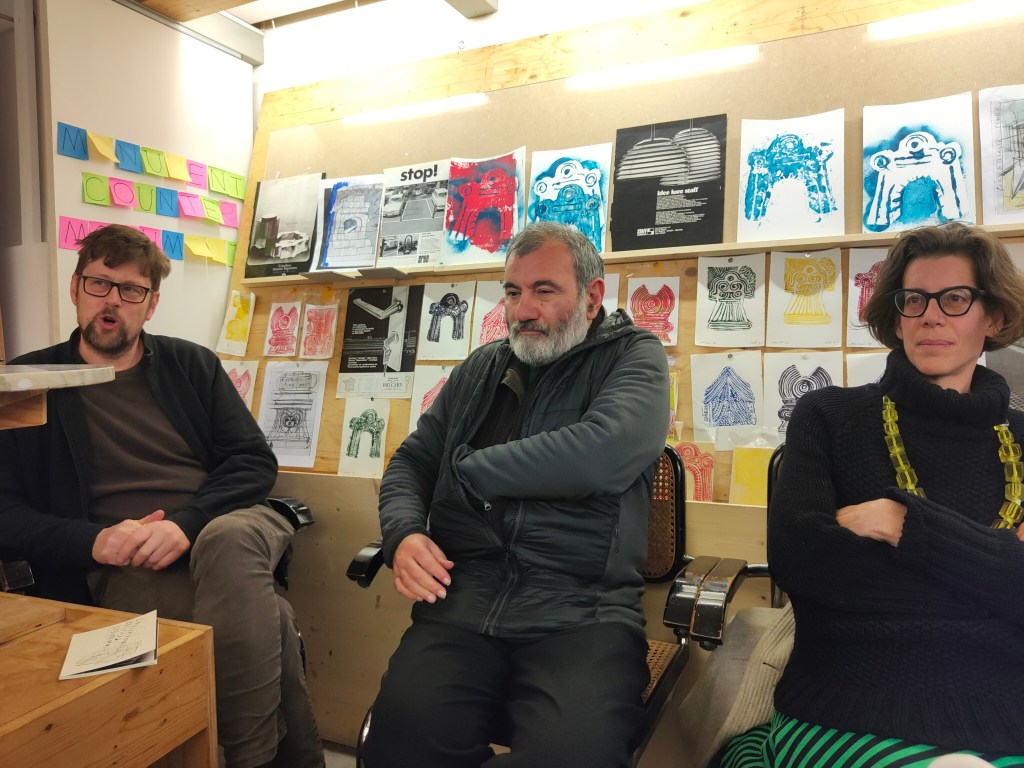
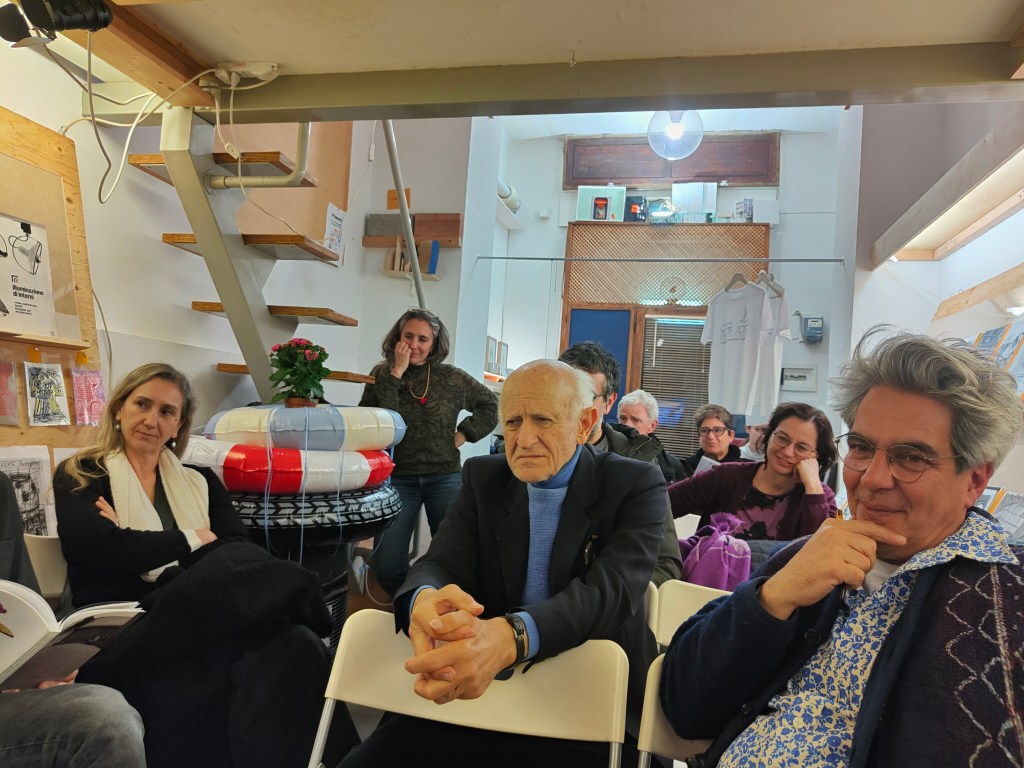
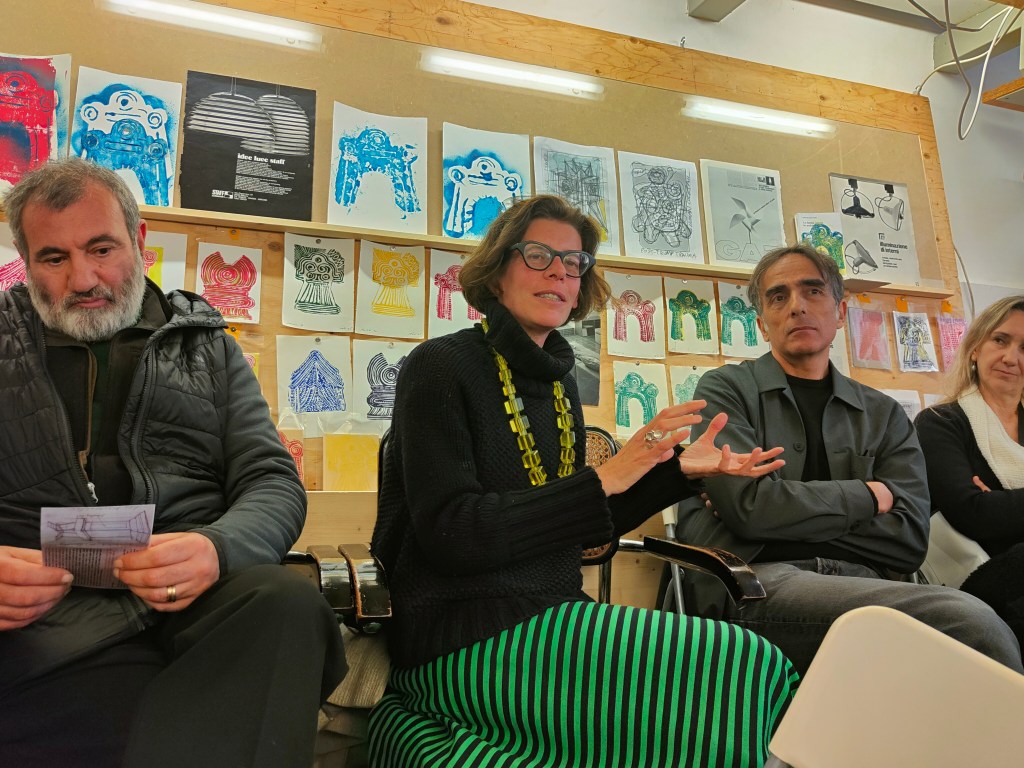
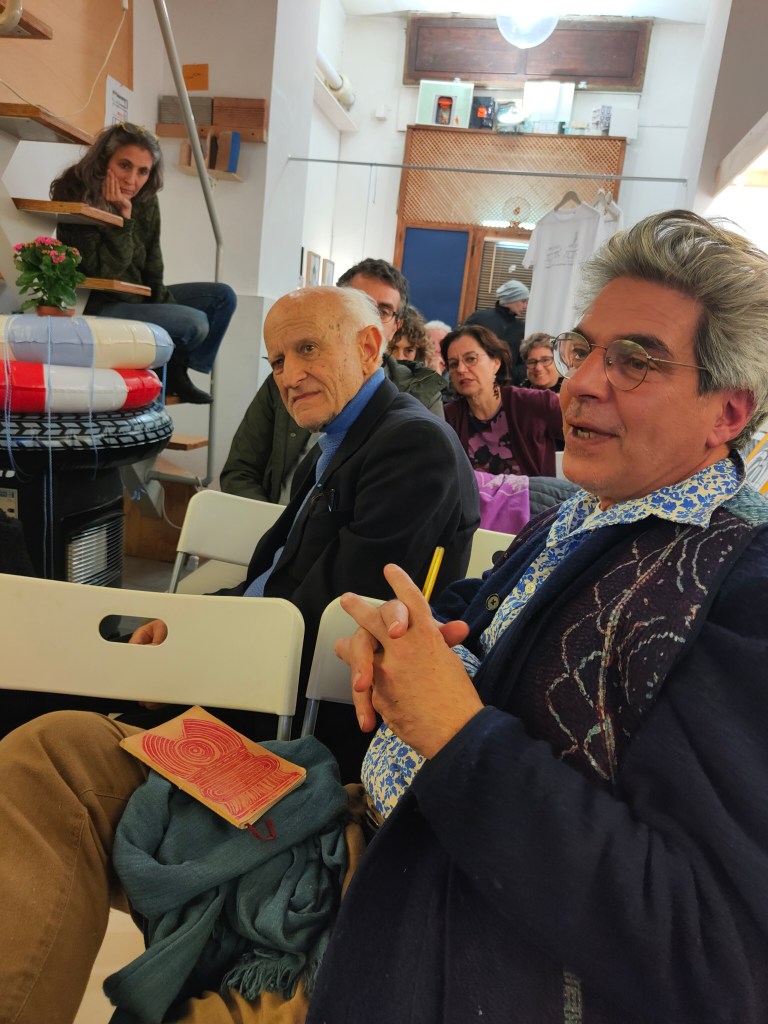
The opposite of monument is humility.
The subject of monuments is obviously a very big and also very ambiguous topic to consider. Principally, it covers a broad range of subcategories: statues, sculptures, ancient ruins, obelisks, totems, landart, cemeteries, and memorials, but also monumental buildings, monumental arches, bridges, landscapes, forests, mountainscapes… As you can imagine the list is ill defined and definitely contentious. Some prefer the term “public art,” which would not cover most of the categories mentioned above, but an abridged definition by Wikipedia, would go like this: public art is a “site specific” multi-media work created for the benefit of the general public.
When I first began making conceptual designs for new kinds of monuments, I was quite aware of the immensely sticky situation I was getting into. I had been obsessed for some time with the social and political contradictions inherent in many existing or historic monuments, especially of the representative and or figurative kind. I was also tracking other forms of public placed symbols: like the statuary icons of victorious conquerors whose actions were based on violence and oppression; the museums erected to celebrate a significant triumphal achievement but whose contents actually comprise the looted fortunes of other lesser fortunate cultures; or memorial cemeteries whose remains of the perished have been violently desecrated in defiance of any human compassion.
The following examples reproduced here inside the folio “Counter-Monuments” have been selected from the book I am currently completing: “Monuments, Counter-Monuments: monuments for the recognition of the everyday .“
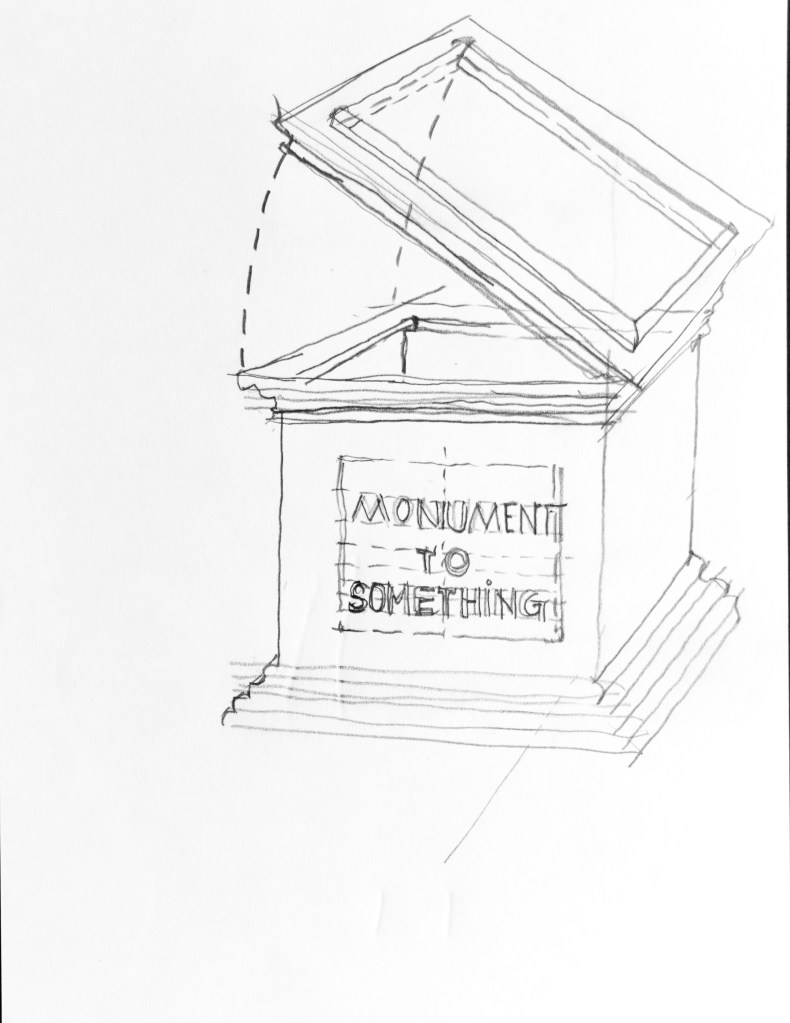
Monument to Something.
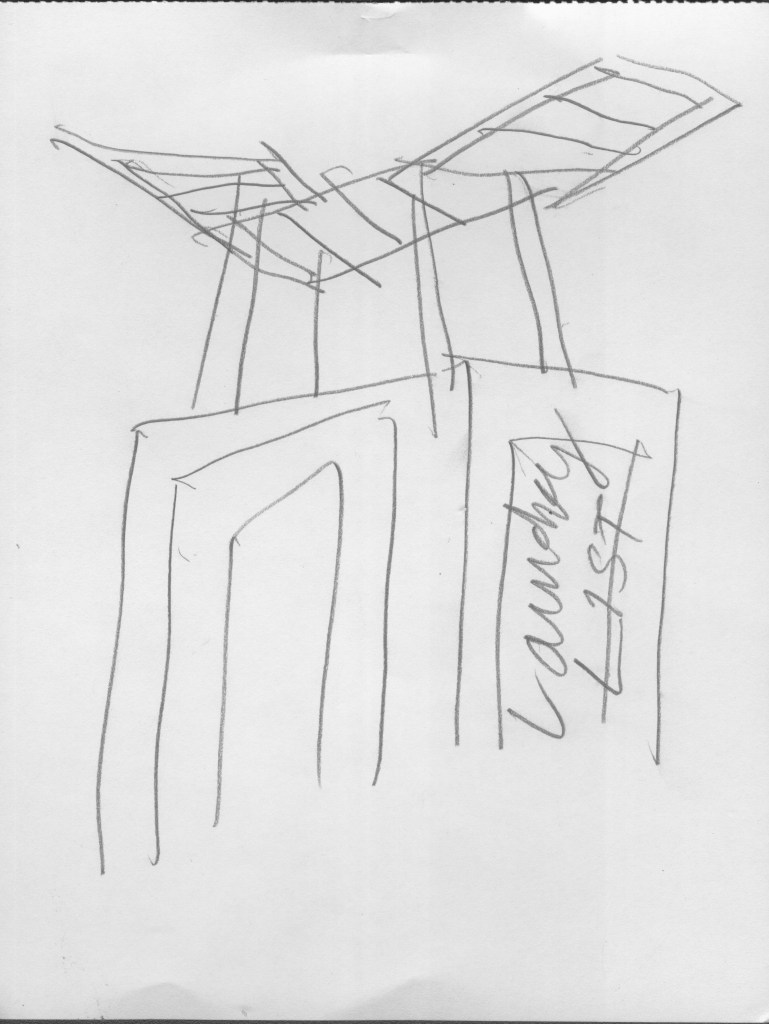
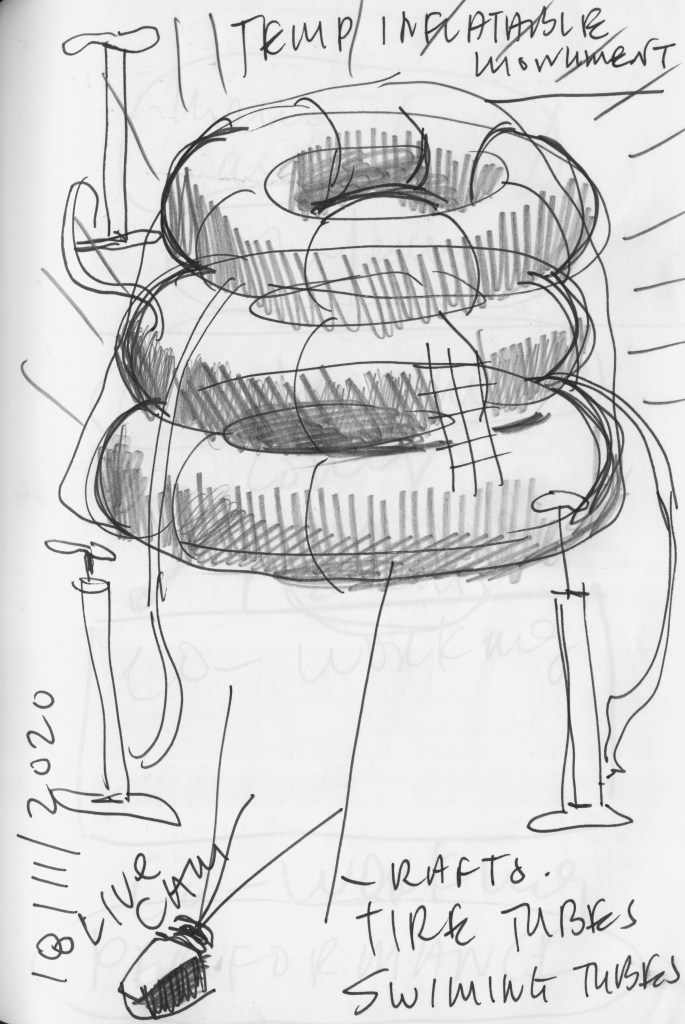
Temporary Inflatable Monument.
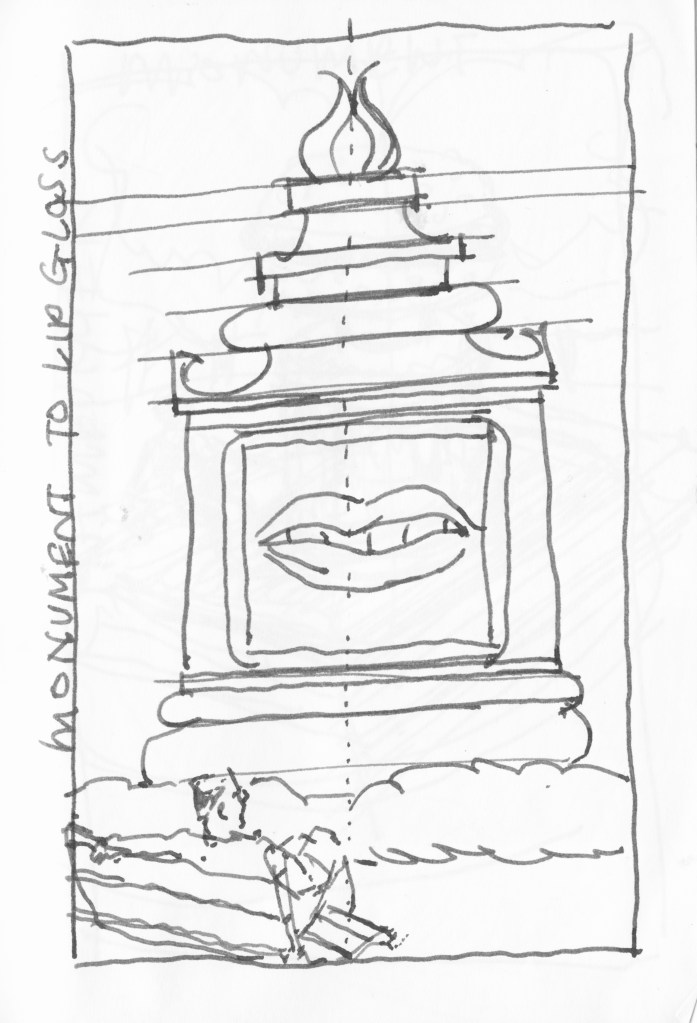
Monument to Lip Gloss.
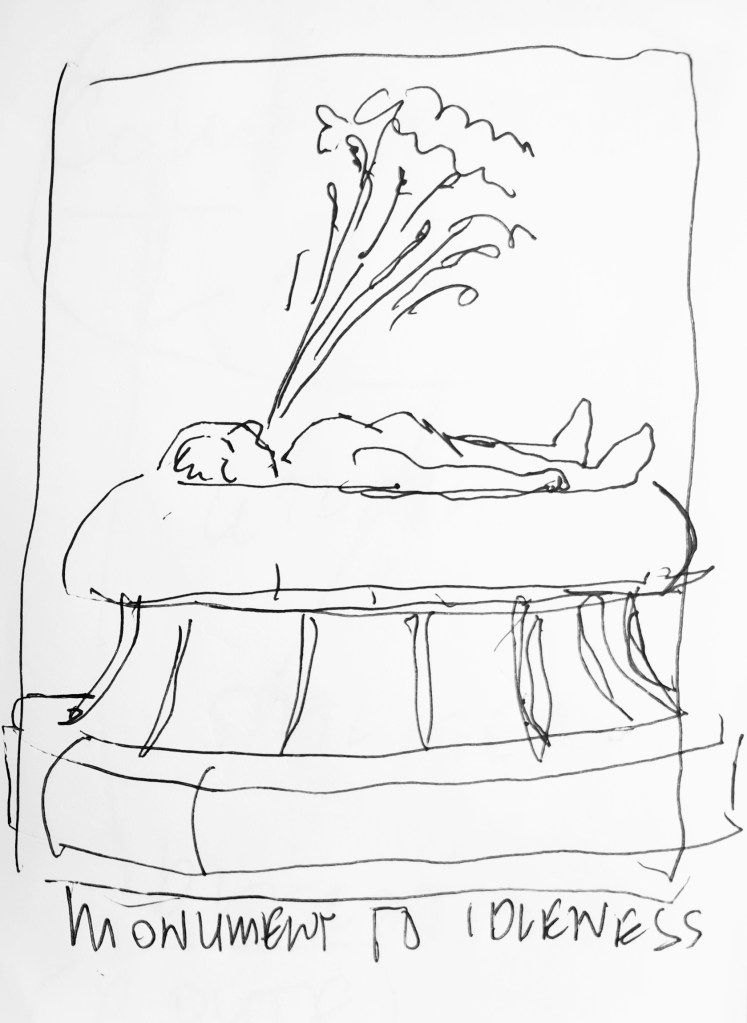
Counter-Monument: Monument to Idleness.
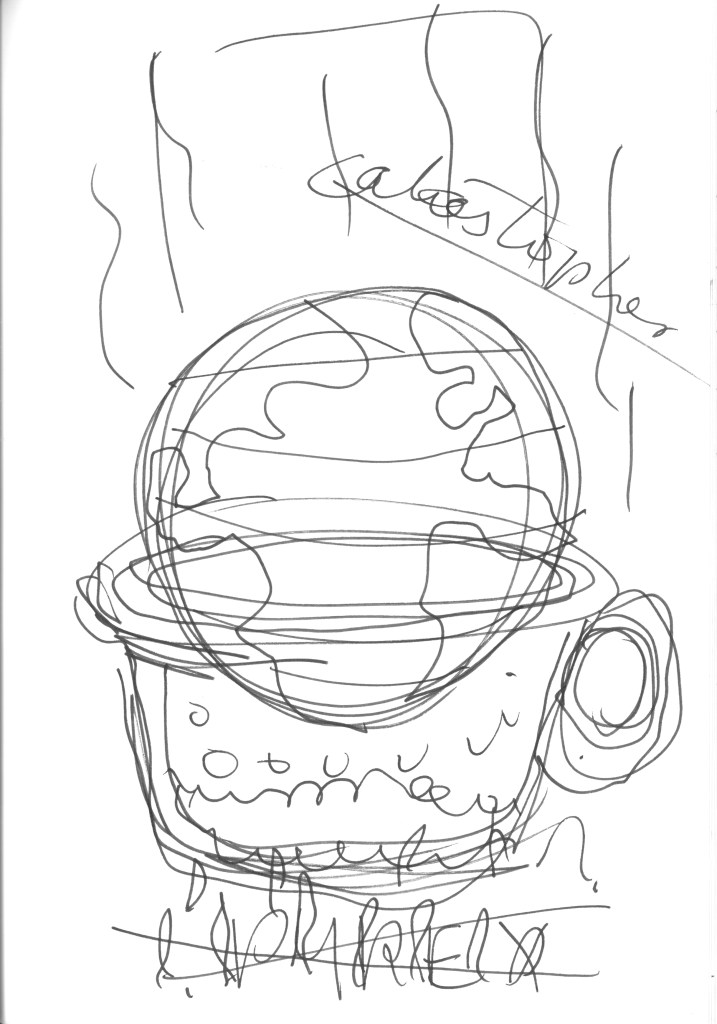
Counter-Monument: Monument to Global Warming and Catastrophes.
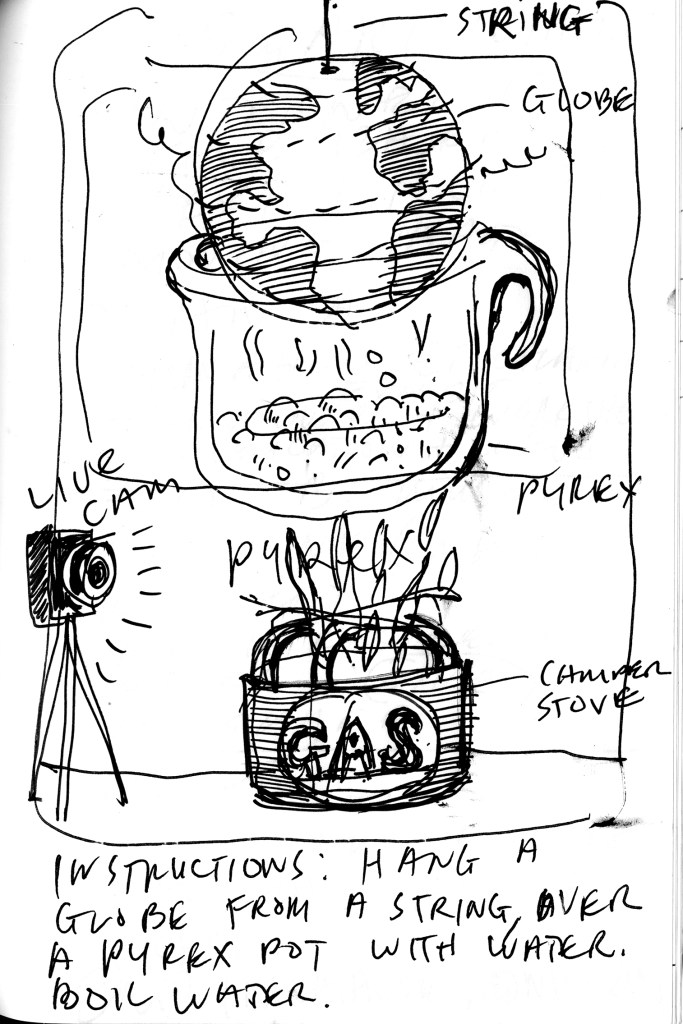
Counter-Monument: Monument to Global Warming: Instructions for installation.
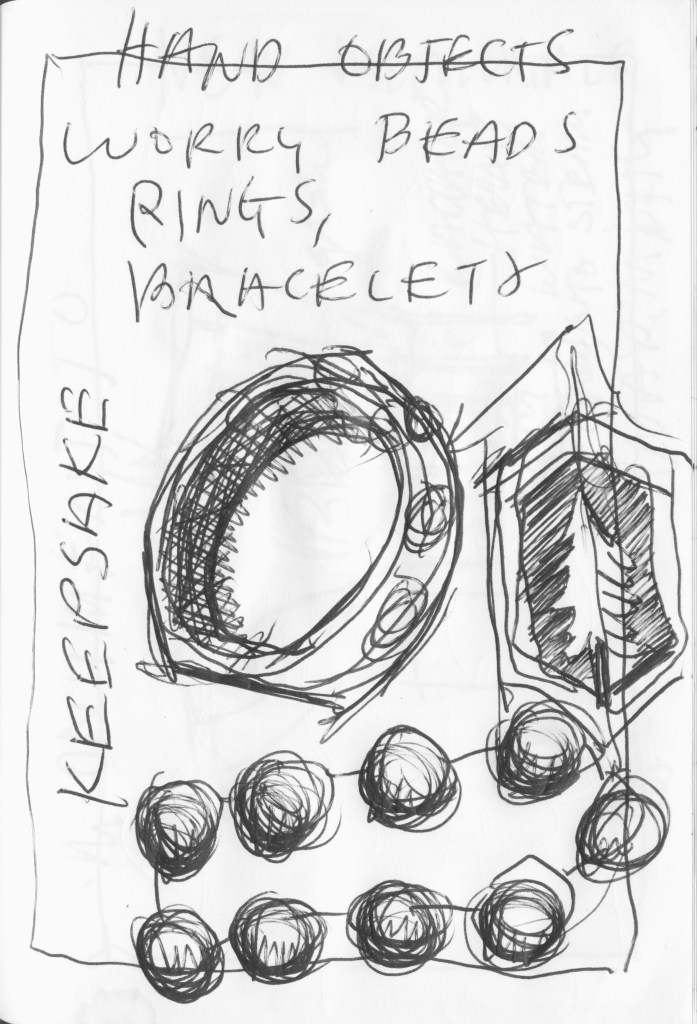
Counter-Monument: Monument to intimate hand objects: worry beads, rings, keepsakes, bracelets.
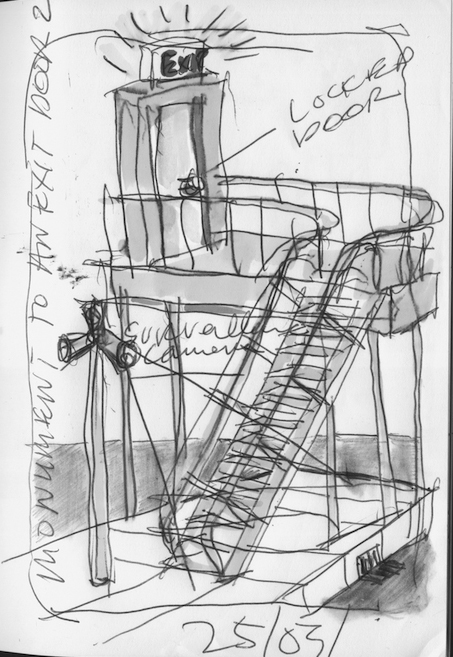
Counter-Monument: Monument to an Exit Door.
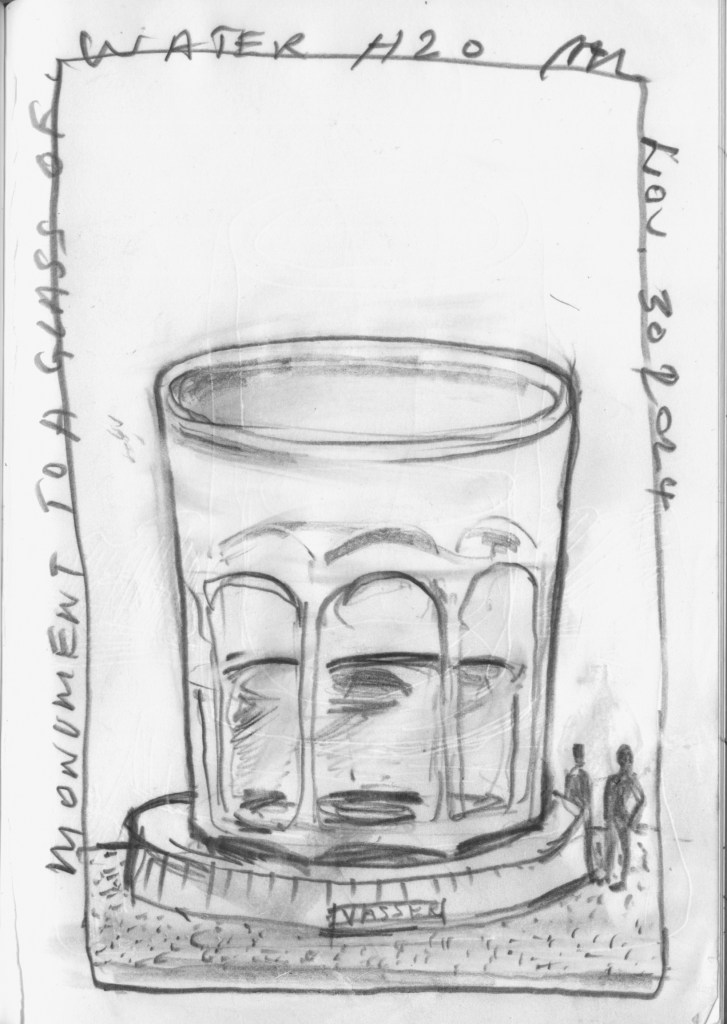
Counter-Monument: Monument to a Glass of Water- H20.
 ArtFolios
Leave a comment